Electronic Recycling in New York
Dispose of obsolete electronics responsibly while protecting environmental resources and securing confidential data.
Electronic devices are fundamental to modern everyday operations. However, as technology rapidly evolves, commercial hardware and household devices quickly become obsolete. Computers slow down, high-definition monitors break, and offices regularly swap out aging infrastructure for next-generation hardware. Consequently, homes and corporate environments routinely accumulate massive amounts of electronic waste.
Instead of discarding these devices with standard trash, proper disposal requires specialized hazardous material handling. This is why Electronic Recycling in New York has become an indispensable pillar of modern environmental management and municipal waste compliance.
Electronic waste, commonly known as e-waste, contains a mix of valuable, high-grade materials and highly volatile chemicals. For instance, discarded electronics contain premium metals like copper, aluminum, and gold that can be recovered and reintroduced into manufacturing pipelines.
Conversely, the same devices contain hazardous materials such as lead, mercury, cadmium, and combustible lithium-ion batteries. Therefore, choosing a responsible recycling framework is essential to protecting public health and conserving finite natural resources.
New York State actively enforces strict environmental laws regarding technology disposal. Certain devices cannot legally be discarded in municipal landfills or set out on curbsides with standard household waste.
Because of these strict rules, professional junk removal and environmental recycling services are necessary to help residents and corporate entities follow proper state procedures. Trained teams collect unwanted tech assets, transport them safely, and ensure they reach certified e-waste facilities.
Through professional electronic recycling, individuals and organizations can clear out outdated technology while fully supporting eco-friendly disposal practices.
Why Electronic Recycling Matters in New York
The global generation of electronic waste is growing rapidly every year. New iterations of consumer tech enter the market constantly, making older equipment obsolete much faster than in previous generations.
Without a structured recycling pipeline, millions of tons of electronics end up buried in landfills. Over time, these crushed casings break down and leak toxic chemicals into surrounding ecosystems.
For example, computer circuit boards and heavy cathode-ray tubes contain substantial amounts of lead solder and other toxic metals. When exposed to rain and shifting weather conditions, these components corrode, potentially contaminating local soils and groundwater networks.
Proper electronic recycling effectively stops this environmental contamination. Furthermore, it allows facilities to recover rare and valuable components. Isolating gold, silver, and palladium from old printed circuit boards reduces the energy-intensive mining of raw resources, supporting long-term conservation.
Finally, proper e-waste management preserves critical landfill space. High-density urban centers in New York generate huge amounts of solid waste annually. Diverting heavy electronic waste to specialized facilities reduces landfill strain and supports sustainable municipal waste models.
Ultimately, professional electronic recycling protects local ecosystems and strengthens community health.
What Counts as Electronic Waste?
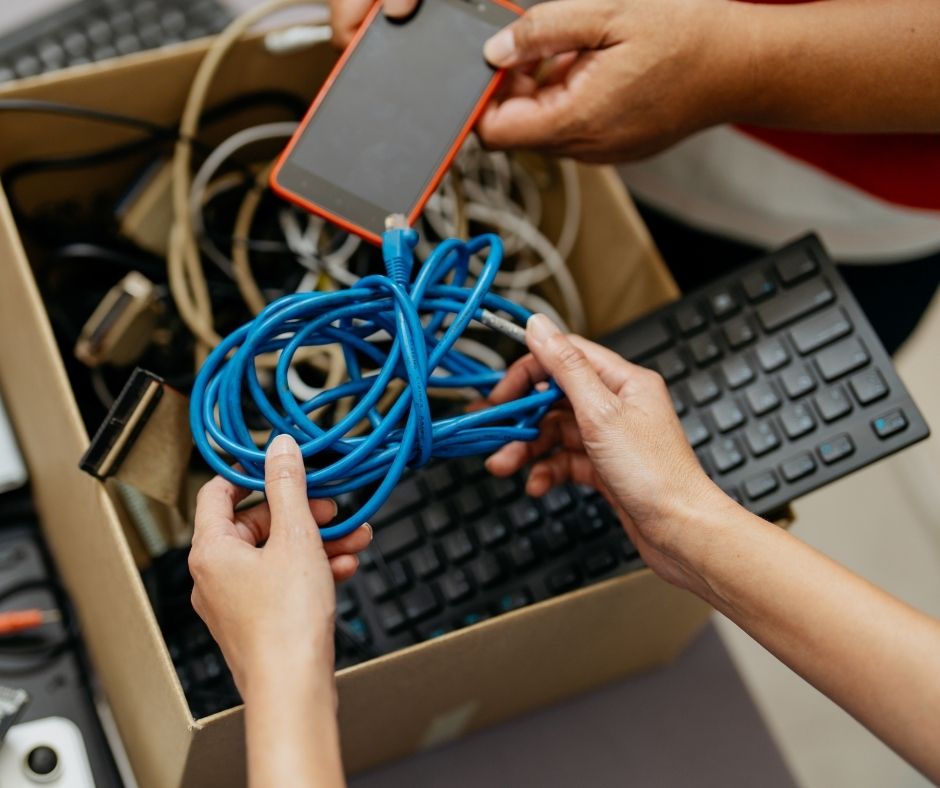
Electronic waste includes any tool or appliance that requires a power cord or internal battery to operate. Once these items stop working or lose software support, they must be processed through authorized recycling networks.
Common residential and commercial examples include:
- Personal Computing Hardware: Outdated desktop towers, laptops, tablets, and mainframes.
- Display Technologies: LCD monitors, plasma televisions, and old cathode-ray tube (CRT) screens.
- Office Infrastructure: Network printers, commercial scanners, copiers, and fax units.
- Communication Technology: Smartphones, office desk phones, and teleconferencing hardware.
- Entertainment Systems: Gaming consoles, media players, and stereos.
- Networking Infrastructure: Commercial routers, modems, server racks, and switchboards.
- Peripheral Accessories: Keyboards, mice, power cables, and external hard drives.
Because these units contain intricate, multi-layered components, they must be disassembled using specialized industrial methods. Professional electronic recycling teams ensure that every piece of hardware is handled safely and tracked appropriately.
New York Electronic Recycling Laws and Regulations
New York State regulates how e-waste must be managed. The New York State Electronic Equipment Recycling and Reuse Act makes it illegal for residents and businesses to throw designated electronic devices into standard household trash.
Items such as televisions, monitors, laptops, and printers must be channeled through state-approved recycling operations. These laws protect municipal sanitation workers and prevent hazardous materials from leaching into local ecosystems from standard trash trucks.
For residential properties, this means electronics must be brought to designated drop-off sites or collected by professional junk removal companies. Businesses face even stricter rules, requiring detailed asset logging and verified recycling records when upgrading their office technology.
Because managing these regulations can be complex, many organizations rely on professional services to handle their electronic recycling safely and legally.
How the Electronic Recycling Process Works
Modern electronic recycling uses a multi-step process designed to maximize resource recovery while completely eliminating toxic hazards.
- Coordinated Collection and Sorting
Unwanted devices are collected from homes, corporate complexes, or regional drop-off centers. Once at the processing facility, items are categorized by their device class and material type.
- Technical Disassembly
Trained technicians manually break down the devices. They separate plastic casings, steel housings, wiring bundles, and circuit boards to prevent cross-contamination during bulk processing.
- Targeted Data Destruction
Before physical recycling occurs, data-bearing devices like hard drives undergo secure digital wiping or physical shredding to completely protect user privacy.
- Material Refining and Reclamation
Sorted plastics, glass, and raw metals are sent to specialized plants to be melted down and reprocessed, turning old tech components into clean raw materials for future production.
- Hazardous Material Isolation
Toxic elements like mercury lamps and leaded glass are extracted and safely neutralized in specialized containment facilities, keeping them completely out of the public environment.
Residential Electronic Recycling Services
Over time, many households accumulate old electronics. Broken televisions, outdated smartphones, obsolete tablets, and tangled boxes of power cords often end up forgotten in closets, basements, or garages.
Eventually, this dead technology creates major home clutter. However, leaving these items on the curb can lead to municipal fines. Professional recycling services offer a simple, stress-free alternative for homeowners.
Professional teams remove the burden of lifting and transporting heavy televisions or commercial-grade desktop setups. Homeowners can simply schedule a convenient pickup window, and a trained crew will manage the process from extraction to final recycling.
Additionally, clearing out hidden electronic clutter helps restore valuable storage space while ensuring full compliance with state environmental laws.
Electronic Recycling Solutions for Businesses
Corporate offices generate huge volumes of e-waste during hardware refreshes. Companies regularly upgrade entire departments with new laptops, monitors, network printers, and server infrastructure.
Additionally, corporate relocations or downsizings often reveal years of outdated, unused tech storage. Professional electronic recycling services help businesses manage these commercial transitions smoothly and efficiently.
High-capacity commercial hauling options allow organizations to clear out whole server rooms or office floors in a single visit. Furthermore, premier recycling providers ensure secure transport and strict data destruction protocols for all data-bearing drives.
This secure approach keeps sensitive corporate data and proprietary records safe from data leaks. Choosing a licensed recycling partner also helps businesses meet their environmental sustainability targets, turning an office cleanout into a documented win for eco-friendly corporate responsibility.
Preparing Your Electronics for Recycling
To ensure your electronic recycling process runs as efficiently and securely as possible, we recommend taking a few preparatory steps before the collection crew arrives:
- Execute Local Data Wiping: Log out of personal cloud accounts, back up essential files, and perform a factory reset on smartphones, tablets, and computers to clear personal profiles.
- Disconnect Peripheral Accessories: Unplug and bundle peripheral components, including power bricks, HDMI cables, external keyboards, and mice.
- Consolidate E-Waste Assets: Gather all targeted devices in a central, easily accessible area on your property to speed up extraction.
- Isolate Leaking Batteries: Inspect older devices for swelling or leaking battery compartments. Place any compromised batteries in a separate containment bag and alert your collection crew before they begin handling the equipment.
Environmental Benefits of Electronic Recycling
Committing to a professional electronic recycling framework delivers massive environmental benefits across local and global ecosystems:
- Diverts Non-Biodegradable Waste: Plastic casings, composite materials, and leaded glass last for centuries in landfills; recycling keeps these bulky items out of our public lands.
- Reduces Industrial Mining Demands: Reclaiming precious metals from existing circuit boards uses significantly less energy than mining raw materials from the earth.
- Protects Local Water and Wildlife: Safe containment prevents mercury, cadmium, and lead from leaching into local watersheds and harming wildlife.
- Lowers Manufacturing Carbon Footprints: Processing recycled metals consumes up to 80% less energy than refining raw ore, directly lowering global carbon outputs.
Choosing a Reliable Electronic Recycling Service
Partnering with the right junk removal and recycling company ensures your old technology is handled responsibly and legally. When researching local options, verify that they meet these core professional benchmarks:
Ensure your chosen company explicitly promises to transport your electronics to state-certified processing plants. Confirm that they offer full-service inside collection so you don’t have to carry heavy items downstairs or out to the curb yourself.
Finally, choose a team that provides clear, transparent pricing and open communication, which are the hallmarks of a truly professional service provider.
FAQ
Where can I find authorized electronic recycling drops in New York?
Many local municipalities run dedicated e-waste drops or seasonal recycling drives. For a more convenient option, professional estate cleanout and junk removal companies can collect your electronics directly from your property and transport them to approved facilities.
What services offer free electronic recycling collection in New York?
Certain municipal collection events and manufacturer take-back initiatives offer free e-waste drop-offs for select consumer brands. For bulk commercial cleanouts or heavy household items, professional removal services offer comprehensive pickup and disposal options.
How do I properly dispose of broken laptops through New York recycling channels?
Broken or damaged laptops should be handled by certified e-waste facilities. These facilities safely extract the internal components, recycle the plastic and metal casings, and dispose of the lithium-ion batteries according to strict environmental laws.
How should I prepare a computer or laptop for recycling?
Before handing your computer over for recycling, back up your critical files to an external drive or cloud service. Log out of all personal profiles, erase your hard drive, and perform a factory reset to protect your personal data.
Where can I find upcoming electronic recycling drop-off events in New York?
Local community centers and city environmental protection departments frequently share schedules for regional e-waste collection drives online. If you don’t want to wait for a scheduled event, you can hire a professional junk removal service to collect your old electronics at your convenience.
Are there community e-waste collection drives coming to Brooklyn?
Brooklyn hosting groups frequently schedule neighborhood collection drives in public parks and municipal parking areas throughout the year. You can check city environmental calendars or community newsletters for upcoming dates.
Can professional recycling services handle water-damaged or completely broken hardware?
Yes. Certified e-waste processing centers routinely accept cracked monitors, water-damaged laptops, and completely broken office equipment. They focus on harvesting the raw metals and materials inside, regardless of whether the device still turns on.
Do electronic recycling companies help destroy sensitive hard drive data?
Many premier e-waste hauling providers offer secure handling and partner with facilities that provide data destruction. If security is a top priority, verify your provider’s hard drive shredding and data security procedures before booking.
Do I need to pack my electronics in boxes before the pickup crew arrives?
You don’t need to wrap or box your equipment. Professional teams are fully trained to lift, carry, and load loose devices, monitors, and server racks directly from your property safely.
How is organic plastic from electronics processed during recycling?
The plastic housings harvested from old computers and televisions are separated from the metal components, cleaned, shredded into small pellets, and melted down to be reused in industrial manufacturing.
Can a professional e-waste pickup help prepare an office for a move?
Yes. Booking an electronic cleanout is an excellent way to streamline an upcoming corporate relocation. Clearing out outdated servers, old monitors, and unused wiring ensures you only move active, valuable technology assets to your new office space.
How often should a business schedule professional electronic recycling?
Most mid-sized businesses benefit from scheduling an e-waste cleanup once or twice a year to keep storage rooms clear. However, large corporate offices undergoing continuous hardware upgrades often set up ongoing quarterly collection schedules.
Why Choose Clutter Free Service?
Clearing away old e-waste can feel overwhelming, especially when managing a mix of heavy televisions, complex office networks, or decades of accumulated storage. This is where professional junk removal and estate cleanout experts deliver essential support.
Clutter Free Service provides dependable, comprehensive electronic recycling and cleanout solutions built specifically for New York homeowners and commercial businesses.
Clutter Free Service eliminates the stress of hauling heavy items. Their experienced teams lift, load, and transport outdated electronics directly from your property, saving you trips to municipal disposal drop-offs. Whether you need to clear an old television from a basement or empty an entire office floor, they bring the equipment and manpower to complete the job safely.
The team prioritizes environmentally responsible disposal, ensuring that all collected e-waste is directed to state-certified processing facilities rather than landfills. Clutter Free Service also helps clients identify forgotten tech clutter hidden deep in commercial warehouses, attics, and storage lockers.
By partnering with an experienced provider like Clutter Free Service, you gain a convenient, reliable solution for all your e-waste challenges, ensuring your technology is recycled safely, responsibly, and legally.
Responsible Electronic Recycling Protects Communities
Electronic hardware remains a crucial tool for daily life and business operations. However, when these devices inevitably reach the end of their functional lifespan, handling their disposal responsibly is a pressing civic requirement.
Improperly throwing away technology damages local environments, wastes valuable manufacturing resources, and violates New York State laws. Fortunately, professional recycling services offer a simple, effective solution.
Through Electronic Recycling in New York, local residents and corporate teams can safely clear out old equipment while protecting our shared natural resources. Trusted providers like Clutter Free Service simplify the process by taking care of all the lifting, loading, and compliance logistics.
As technology continues to develop, responsible e-waste recycling will remain an essential part of keeping our communities clean. Choosing a certified professional provider ensures your data stays safe, your business stays compliant, and the environment is protected for the future.