Fire Damage Cleanup in NY
What Happens When the Fire Department Leaves Your Property?
When local firefighters wrap up their operations and clear the scene, property owners often experience a profound sense of relief paired with sudden confusion. Although the immediate emergency ends, a new set of complex challenges instantly begins. The physical structure stands safe from active flames, but the environment inside remains severely compromised, unstable, and hazardous.
First responders prioritize life safety and fire suppression above all else. Consequently, their necessary actions leave behind thousands of gallons of water, broken structural barriers, and heavy chemical residues. Once emergency crews pack up their equipment and depart, the official responsibility shifts directly to the property owner to secure the building and start the mitigation process.
Furthermore, unaddressed post-fire environments deteriorate at a rapid pace. Corrosive soot settles into surfaces within minutes, water penetrates deep into flooring systems, and airborne contaminants spread continuously throughout the HVAC ductwork. Therefore, taking immediate, structured action becomes your top priority. Understanding what transpires in those crucial early hours helps you make smart, safe, and cost-effective decisions for your home or commercial building.
Understanding the Four Unique Phases of Post-Fire Damage
A common misconception is that fire damage consists solely of charred wood and burned belongings. On the contrary, a property suffers from four distinct, compounding types of destruction that require specialized attention.
Direct Thermal Fire Damage
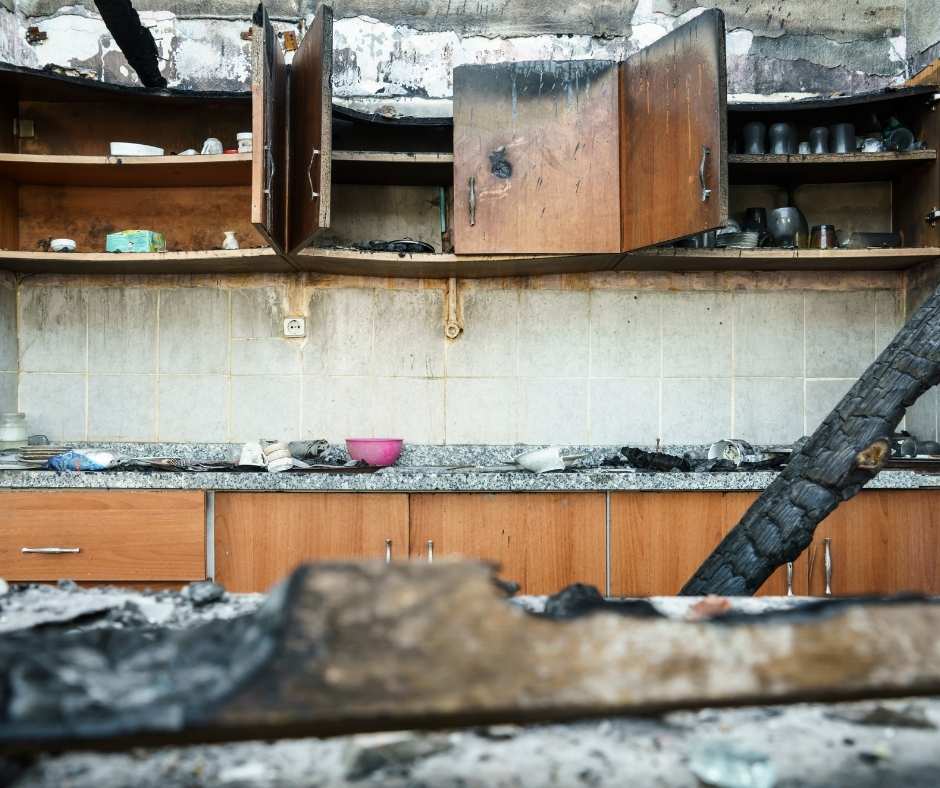
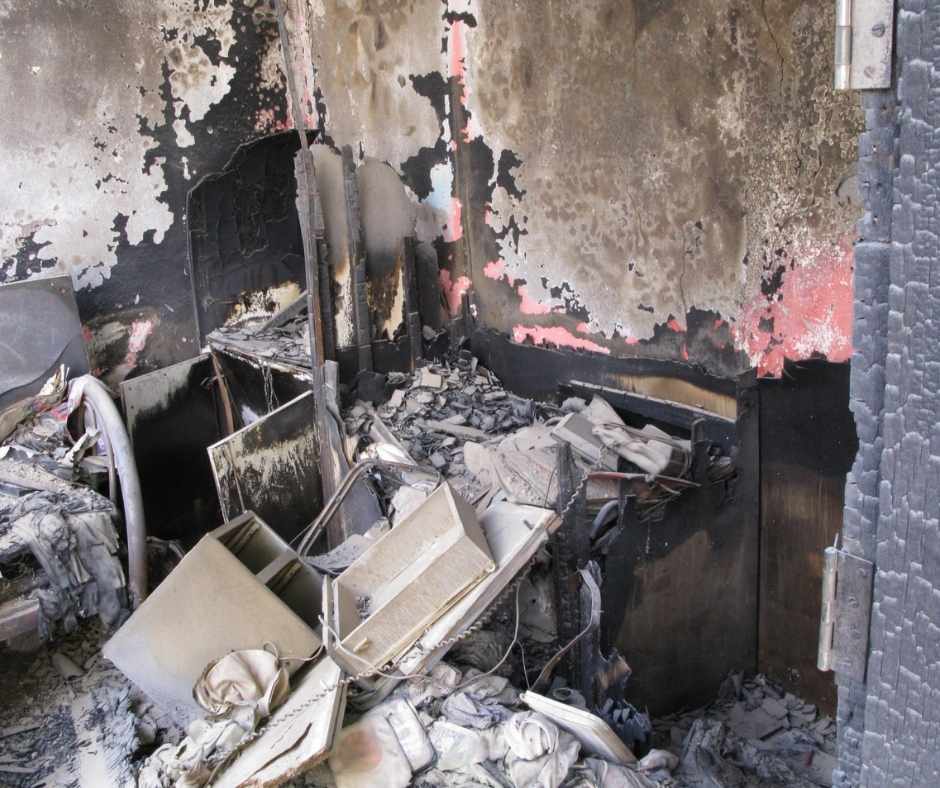
Direct thermal fire damage represents the visible structural destruction caused by open flames. High temperatures consume building materials like drywall, wooden framing, roof trusses, and insulation. In addition, intense heat weakens structural supports, melts synthetic compounds, and turns personal items into hazardous debris. Because thermal damage compromises the core structural integrity of a building, certified technicians must carefully evaluate these areas before anyone safely steps inside.
Airborne Smoke Residue and Odor Penetration
Even in rooms where flames never reach, smoke travels aggressively. Smoke consists of tiny, hot gaseous byproducts carrying microscopic particles. As smoke cools, it deposits oily films across walls, ceilings, windows, and contents. In addition to creating unsightly discoloration, smoke carries pervasive, toxic odors that sink deep into porous materials like textiles, upholstery, drywall, and unsealed wood. Without industrial air scrubbing and specialized thermal fogging, these lingering odors remain trapped inside structural elements indefinitely.
Corrosive Soot Accumulation
Soot is the fine, black powdery residue left behind by incomplete combustion. Because modern homes contain a mixture of natural woods, synthetic plastics, textiles, and electronics, the soot produced during a property fire is highly acidic and toxic. When soot settles on surfaces, it immediately begins chemically etching into metals, glass, painted finishes, and marble. For example, chrome fixtures tarnish within hours, while plastic appliances yellow permanently if technicians do not clean them promptly using specialized neutralizing solutions.
High-Volume Water Damage from Firefighting Operations
Ironically, the water used to save a building often causes as much damage as the fire itself. Fire hoses discharge hundreds of gallons of high-pressure water per minute directly into a structure. Consequently, water accumulates rapidly on floors, cascades down through interior walls, and saturates subflooring, insulation, and ceiling joists. Furthermore, this moisture creates a perfect breeding ground for toxic mold spores, which can begin colonizing wet organic materials in as little as 24 to 48 hours.
The Critical Difference Between Fire Damage, Smoke, Soot, and Water Destruction
To successfully manage a restoration project, property owners must recognize that fire, smoke, soot, and water require completely different tools, chemical agents, and cleanup methodologies. Treating all forms of damage with a single uniform cleaning process leads to permanent property loss and inflated repair costs.
Damage Type | Primary Cause | Main Characteristics | Specialized Cleanup Method |
Direct Fire Damage | Open flames and extreme thermal heat | Charred framing, destroyed walls, melted plastics, structural failure | Structural demolition, heavy debris removal, structural shoring |
Smoke Residue | Airborne gaseous byproducts | Oily films, strong pungent odors, discoloration on surfaces | Thermal fogging, ozone treatment, HEPA air scrubbing, duct sealing |
Soot Deposits | Fine acidic carbon particles | Black smudging, chemical etching, rapid pitting of metals | Dry chemical sponge wiping, alkaline neutralizing washes, media blasting |
Water Intrusion | Fire suppression and sprinkler systems | Standing water, warped wood, sagging ceilings, elevated humidity | Submersible pumping, industrial dehumidification, antimicrobial application |
Because each type of damage behaves differently, attempting to wipe down soot with regular household cleaners often smears the acidic oils deeper into wall paint. Similarly, focusing strictly on drying out standing water while ignoring hidden smoke deposits guarantees that toxic odors will resurface as soon as the weather warms up. Proper Fire Damage Cleanup in NY requires an integrated, multi-phase methodology that addresses all four vectors simultaneously.
The Hand-Off Process: Moving from Emergency Cleanup to Structural Restoration
Restoring a property after a devastating incident is a multi-stage journey. Property owners frequently assume that a single general contractor can step in on day one and rebuild everything. In reality, a strict, essential hand-off occurs between the emergency cleanup team and the structural reconstruction crew.
First, emergency technicians arrive to stabilize the structure. They board up blown-out windows, tarp damaged roofs, pump out standing water, and set up commercial drying equipment. During this initial phase, the primary goal is preventing secondary damage, such as weather intrusion or mold outbreaks.
Next, specialized cleanup crews conduct a thorough sorting, salvage, and demolition process. They pack out salvageable personal items for off-site cleaning, strip away ruined building materials, and execute deep decontamination protocols across all remaining surfaces.
Finally, once the building tests negative for moisture, toxic soot, and airborne odors, the property reaches a clean slate condition. At this precise moment, the cleanup crew officially hands the project over to reconstruction contractors. Builders can then install fresh insulation, hang new drywall, lay down new flooring, and rebuild the space safely.
Why Removing Damaged Materials Is Mandatory Before Reconstruction Begins
It is tempting to try to save money by building directly over lightly charred wood or painting over water-stained, soot-covered drywall. However, industry experts agree that thorough demolition and removal of compromised materials is completely non-negotiable before any construction starts.
Preventing Trapped Toxins and Off-Gassing
When synthetic materials like carpets, foam insulation, and plastic laminates burn, they release toxic chemical compounds, including dioxins, formaldehyde, and hydrogen cyanide. These hazardous substances sink deep into porous drywall and wood framing. If a contractor installs new drywall over contaminated framing without proper removal or encapsulation, those trapped toxins continue to off-gas into the interior air supply for years, posing serious health risks to occupants.
Stopping Structural Failure and Hidden Mold Growth
Water-saturated drywall and insulation lose their structural integrity permanently. Even if a wall appears dry on the surface, moisture trapped inside cavity walls rots timber studs from the inside out and fosters hidden colonies of dangerous mold. Removing wet, scorched, or structurally weakened materials down to the sound framework is the only way to ensure your rebuilt property remains structurally safe and healthy.
Eliminating Permanent Odor Re-emergence
Smoke particles embed themselves deep into porous substrates. When humidity levels rise in the summer, trapped smoke particles expand and release strong, burnt odors back into the living space. By aggressively removing heavily impacted materials during the initial cleanup phase, you permanently eliminate the root cause of post-fire odors rather than temporarily masking them.
Managing Damaged Personal Belongings and Content Cleanout
Beyond the building structure itself, a property fire impacts personal belongings, furniture, business records, and family heirlooms. Managing these items requires a disciplined, systematic approach to distinguish between what can be saved and what must be discarded.
The Pack-Out and Inventory Process
Restoration specialists use a detailed inventory process known as a pack-out. Technicians photograph, barcode, and document every item in the affected areas. Salvageable items are carefully packed and transported to a climate-controlled facility for specialized cleaning, deodorization, and secure storage while the building undergoes structural repairs.
Deciding What Can Be Restored Versus Discarded
Determining whether an item is restorable depends on its composition, the intensity of heat exposure, and the type of soot present.
- Hard, Non-Porous Goods: Items made of solid glass, metal, and ceramics can usually be completely decontaminated using specialized ultrasonic cleaning and alkaline washes.
- Textiles and Soft Goods: Clothing, drapery, and bedding exposed to light smoke can often be restored using specialized ozone washing and dry cleaning technologies.
- Porous and High-Risk Items: Mattresses, plush toys, unsealed food items, open cosmetics, and heavily charred furniture absorb toxic chemicals rapidly and must be safely discarded to protect health.
Essential Steps to Take Immediately After a Fire Incident
To help you protect your safety and streamline your upcoming insurance claims, follow this step-by-step emergency checklist immediately after the fire department clears your site.
- Wait for Official Safety Clearance: Never enter the building until the fire marshal or building inspector explicitly declares the structure safe to walk through.
- Contact Your Insurance Carrier: Report the loss immediately to initiate your claim and request guidance on immediate temporary board-up services.
- Document Everything Thoroughly: Take extensive high-resolution photos and video footage of all structural damage, standing water, soot patterns, and destroyed personal property before anything is moved or thrown away.
- Refrain from Attempting DIY Cleanup: Avoid wiping down soot-covered walls, running your central HVAC system, or using home vacuum cleaners, as these actions spread contaminants and cause permanent surface staining.
- Secure Professional Emergency Mitigation: Hire a certified team for Fire Damage Cleanup in NY to board up openings, extract standing water, and begin controlled debris removal immediately.
Partner Up with Clutter Free Service for Total Property Recovery
Navigating the aftermath of a property disaster requires a dependable, experienced partner who understands the complexities of heavy cleanup, structural clearing, and deep site preparation. When you work with Clutter Free Service, you gain access to a dedicated team equipped to handle the most challenging cleanup scenarios with skill, empathy, and efficiency.
Comprehensive Cleanout and Material Disposal
Our team specializes in the heavy lifting required after a property emergency. We quickly and safely remove charred debris, ruined furniture, waterlogged carpets, and damaged building components. By managing the labor-intensive removal process, we ensure your building is cleared out, safe, and completely ready for reconstruction crews to step in without delay.
Specialized Deep Cleaning, Sanitization, and Flooring Restoration
Clutter Free Service goes beyond basic junk removal. We provide specialized deep sanitization, attic and basement clearouts, and expert wood floor repainting and refinishing. Whether your floors require sanding and repainting post-cleanup or your interior spaces need thorough decontamination, our multi-talented team handles the transition seamlessly under one roof.
Discreet, Compassionate, and Certified Service
We recognize that property cleanouts often happen during emotional and high-stress life events. Therefore, our crews operate with complete professionalism, respect, and discretion. We offer unmarked vehicles upon request and maintain strict safety standards across every project, ensuring your privacy and peace of mind from start to finish.
FAQ
How soon should Fire Damage Cleanup in NY begin after a building fire?
Cleanup operations should begin as soon as local authorities grant official permission to enter the site. Ideally, mitigation starts within 24 to 48 hours. Rapid action prevents acidic soot from permanently etching metals and glass, stops standing water from warping subfloors, and prevents dangerous mold growth inside wall cavities.
Can I remain inside my home during the fire cleanup process?
In most cases, staying inside the property during initial cleanup is not recommended. Post-fire environments contain invisible airborne toxins, microscopic soot particles, structural hazards, and strong odor concentrations that pose health risks. Relocating temporarily ensures your family remains safe while crews operate heavy drying and air-scrubbing equipment.
Why is running regular house fans or central air conditioning a bad idea after a fire?
Turning on your central HVAC system or standard household fans forces soot and ash particles directly into your ductwork and distributes toxic debris into unaffected rooms. Professional cleanup technicians rely on specialized HEPA air scrubbers and negative air machines that capture microscopic contaminants without spreading them throughout the building.
How do professionals completely remove persistent smoke odor from a building?
Eliminating smoke odor requires a multi-step process rather than simple air fresheners. Technicians use commercial HEPA air scrubbers, thermal fogging equipment that mirrors the particle size of the original smoke, and industrial hydroxyl or ozone generators. These advanced systems break down smoke molecules at a chemical level, permanently neutralizing odors trapped in structural framing.
Does insurance cover the full cost of fire cleanup and debris removal?
Most standard homeowners and commercial property insurance policies cover fire damage, water extraction, smoke odor neutralization, and debris removal. It is essential to work with experienced cleanup professionals who provide detailed itemized records, photo documentation, and clear estimates to streamline the claims approval process with your insurance adjuster.
Reclaim Your Space and Rebuild with Confidence
A fire incident can feel overwhelming, but recovering your property does not have to be a stressful, fragmented process. By taking immediate action and relying on experienced professionals who understand the intricate science of fire, smoke, soot, and water mitigation, you can protect your building’s structural integrity and ensure a safe environment for the future.
When you require expert support for Fire Damage Cleanup in NY, heavy debris clearing, deep sanitization, or property preparation, Clutter Free Service is ready to step in. Contact our team today to discuss your project, request a detailed estimate, and take the first confident step toward restoring your property to pristine condition.